
Pomona Open Records Coverage
Pomona records do not sit in one city database. The City Clerk keeps municipal legislative material and routes city requests. Los Angeles County offices maintain recorded documents, parcel data, vital records, voter files, court cases, and custody information. California agencies hold statewide certificates, prison records, business filings, and professional licenses. Access depends on the record, not merely on whether a government office created it.
| Pomona Record Group | Official Keeper | Web Index | Coverage and Access |
|---|---|---|---|
| Deeds and recorded real estate documents | LA County RR/CC Recorder | No public online name index | Since 1850/1851; appointment review and copy orders |
| Parcel and assessment data | LA County Assessor | AIN, address, and map search | Current parcel details online; ownership requests route to RR/CC |
| Civil, family, probate, small claims, and criminal cases | LA Superior Court | Paid name searches and case summaries | Coverage varies by case type; terminals and Archives extend access |
| Birth, death, and public marriage records | LA County RR/CC and CDPH | No broad public web index | Inspection by appointment plus authorized or informational copy channels |
| City agendas, minutes, ordinances, and resolutions | Pomona City Clerk | Laserfiche document archive | Browse online or submit a focused city request |
| Custody and disclosable registry data | LASD, CDCR, and California DOJ | Agency lookup tools | Current custody or legally disclosable registry information |
California law does not turn every file into an open file. Juvenile matters, sealed cases, protected addresses, confidential voter data, adoption material, and confidential marriages remain closed or controlled by special laws. Remote court access may also show less than a courthouse terminal. A public index identifies a record, while a copy request retrieves the actual document when disclosure is allowed.
Why Pomona Deeds Stay Offline
Los Angeles County real estate records reach back to 1850/1851, yet the Registrar-Recorder/County Clerk does not publish its grantor-grantee index on the web. The office cites Government Code § 6254.21 and the problem of screening elected and appointed officials' home addresses from recorded documents. That privacy choice makes Pomona deed research far more office-based than many users expect.
The RR/CC appointment page explains the in-person route. Records from 1851 through 1957 are reviewed on the lower level at Norwalk Headquarters, while records from 1958 forward are reviewed on the second floor. Appointments may be scheduled up to three weeks ahead. The office will not perform index searches by telephone.
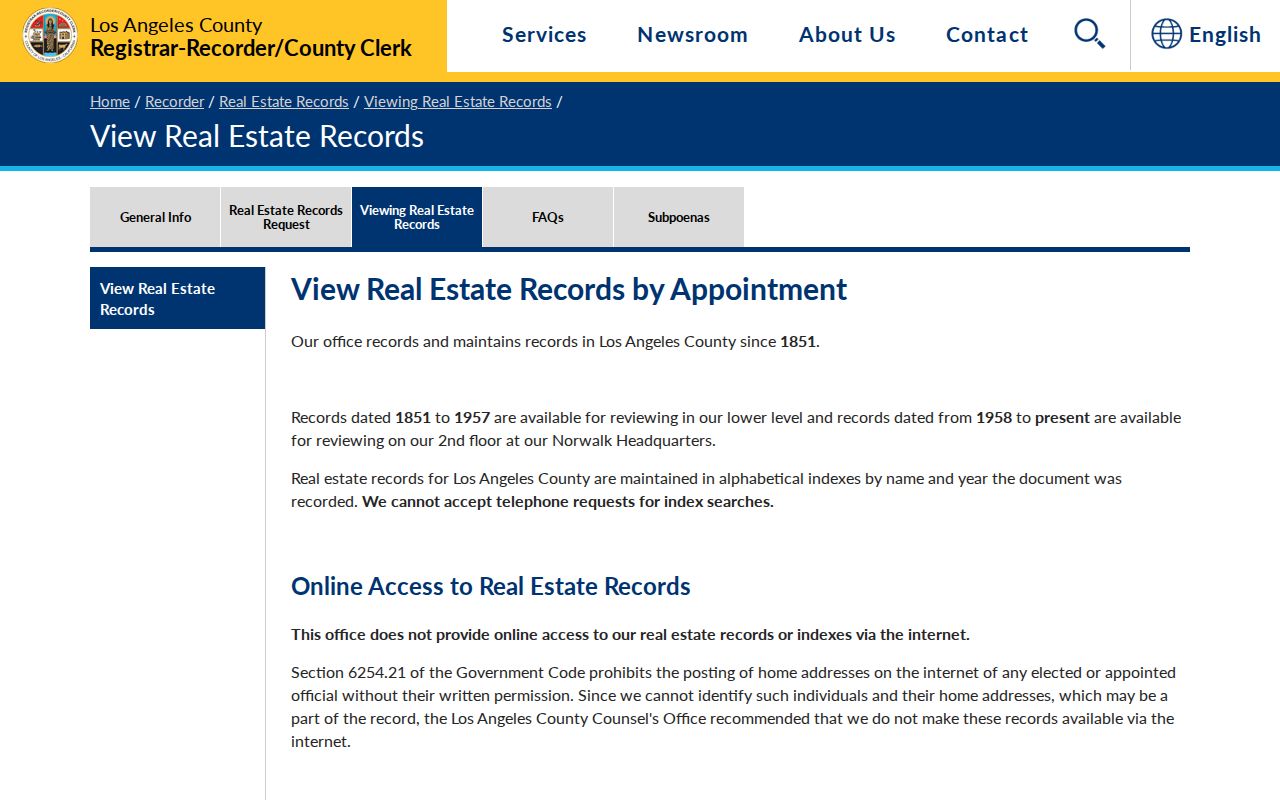
The split by year and floor is an unusual but useful detail. Arriving with a party name and approximate recording year makes the Pomona records search more focused. Copies can be ordered online through the county's LexisNexis route, requested by mail at RR/CC Real Estate Records, P.O. Box 1130, Norwalk, CA 90651-1130, obtained during an appointment, or requested through the listed fax option. The online copy channel may take up to 20 working days. Mail requests accept checks or money orders, but not e-checks, temporary checks, or most foreign checks.
Note: The deed index is offline even though many recorded documents have been digitized for county operations and copy fulfillment.
Pomona Recorder Index Fields
The Norwalk index is organized by name and recording year. It is a grantor-grantee index: a grantor transfers an interest, while a grantee receives it. Once an index citation identifies the document, the RR/CC copy channels provide the record itself. This method can support estate and heir research when a probate name, death record, and deed chain must be reconciled without relying on a commercial data file.
| Index Input | Kind | Needed? | How Pomona Researchers Use It |
|---|---|---|---|
| Party name | Alphabetical index | Yes | Browse the person or entity within the selected year |
| Year recorded | Year range | Yes for narrowing | Choose the correct annual index and review nearby entries |
| Document citation | Retrieval key | After a match | Use the citation to order or inspect the recorded document |
| Appointment | Access step | Expected | Schedule the correct floor for the record's date |
| Telephone search | Unavailable channel | No | RR/CC does not accept index-search requests by phone |
For older Pomona property, a legal description or lot-and-block reference can help distinguish people with similar names. The Assessor portal can supply that parcel context before an office visit. A later deed may then point backward to an earlier owner, probate representative, or trust.
Note: Pomona deed research works best with both a party name and an estimated recording year before the Norwalk appointment.
Pomona Parcel Records Online
The Los Angeles County Assessor Portal searches by Assessor Identification Number, known as an AIN, or by street address. Parcel results can show the situs address, meaning the property's physical location, along with legal description, use type, and building or land characteristics. The map tool adds parcel boundaries, cities, communities, ZIP codes, school districts, map books, and field books.
Owner-name browsing was not confirmed in the public portal. The Assessor's public-record page directs requests for property ownership information to the RR/CC. Pomona parcel research therefore has two distinct parts: the Assessor identifies the land, and the Recorder supplies the ownership documents. Map and map-index links in the parcel summary are updated weekly, according to the Assessor FAQ.
Parcel-to-deed route. Address to Assessor AIN and legal description, then RR/CC name-and-year index, then the recorded document copy.
Pomona Court Records Access
Pomona Courthouse South handles civil, criminal, family-law, juvenile dependency, and juvenile justice matters in the East Judicial District. The LA Superior Court offers case-number access and paid name-search paths. Its criminal defendant name index covers felonies from 1980 forward and misdemeanors from 1988 forward, with some older misdemeanor data reaching 1983. It accepts a last name, first name, optional filing dates, and Exact Match, Starts With, or Sounds Like search logic. Traffic and other infractions are excluded, and payment is nonrefundable even when no match appears.
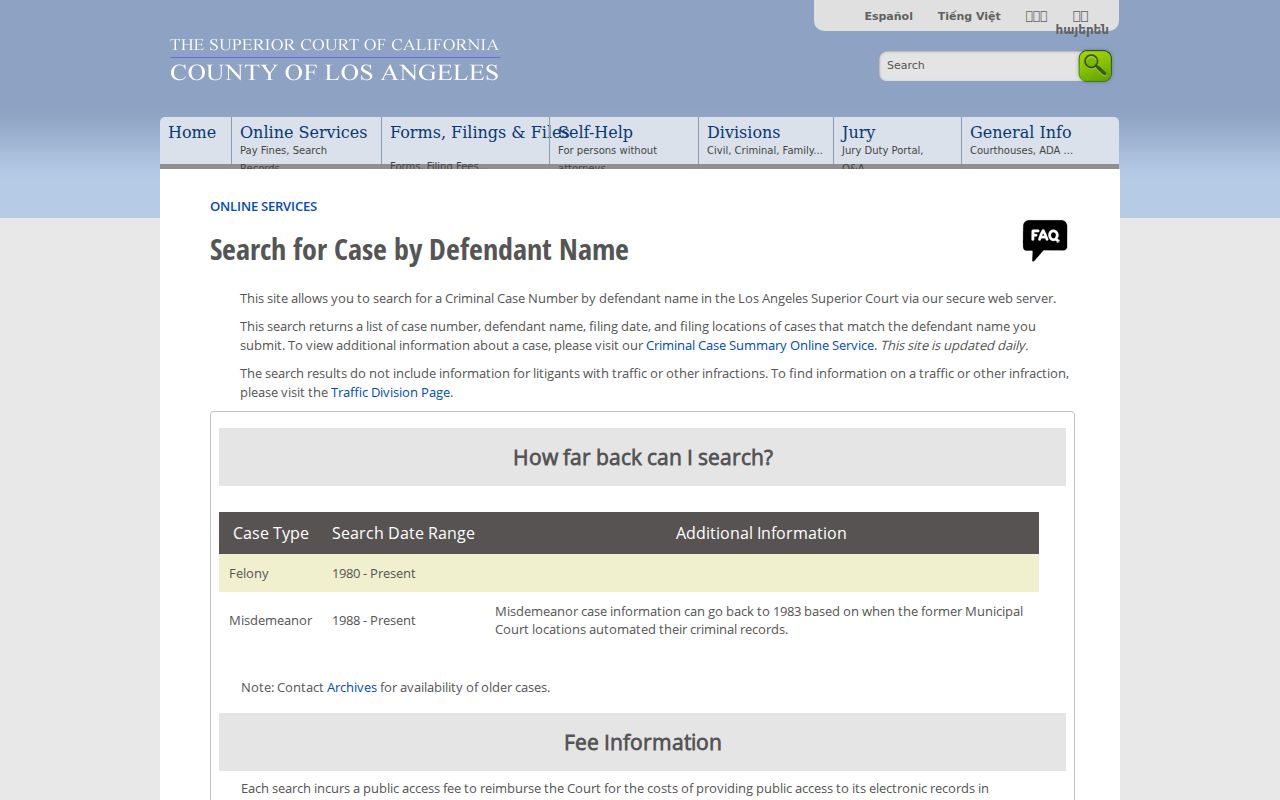
A result identifies the case number, defendant, filing date, and filing location. Civil, family, probate, and small-claims name searches instead return a litigant, case type, filing date and place, and the number of document images available for purchase.
Remote service is only one access channel. Public Access Computers at courthouses may display more in sensitive case categories, while juvenile files, sealed records, and confidential documents remain unavailable. Pomona Courthouse South is at 400 Civic Center Plaza. The clerk's office operates from 8:30 a.m. to 4:30 p.m. on non-holiday weekdays, and appointments are strongly encouraged. Older files route to the LA Court Archives and Records Center.
Note: Family, probate, and unlimited civil name-index coverage begins in 1983; limited civil begins in 1991 and small claims in 1992.
Pomona Vital Records Boundaries
Births, deaths, and marriages from Pomona generally route to the Los Angeles County RR/CC when the event occurred or the license was issued in the county. CDPH Vital Records is the statewide mail option. County birth records are described as available since 1866 on the request page and since 1877 on the inspection page. Public birth-index inspection is limited to pre-1905 and 1964-present records that are not exempt. Death indexes run from 1877 forward, and public marriage indexes from 1852 forward.
The LA County birth request service links to VitalChek as the county's authorized online vendor.
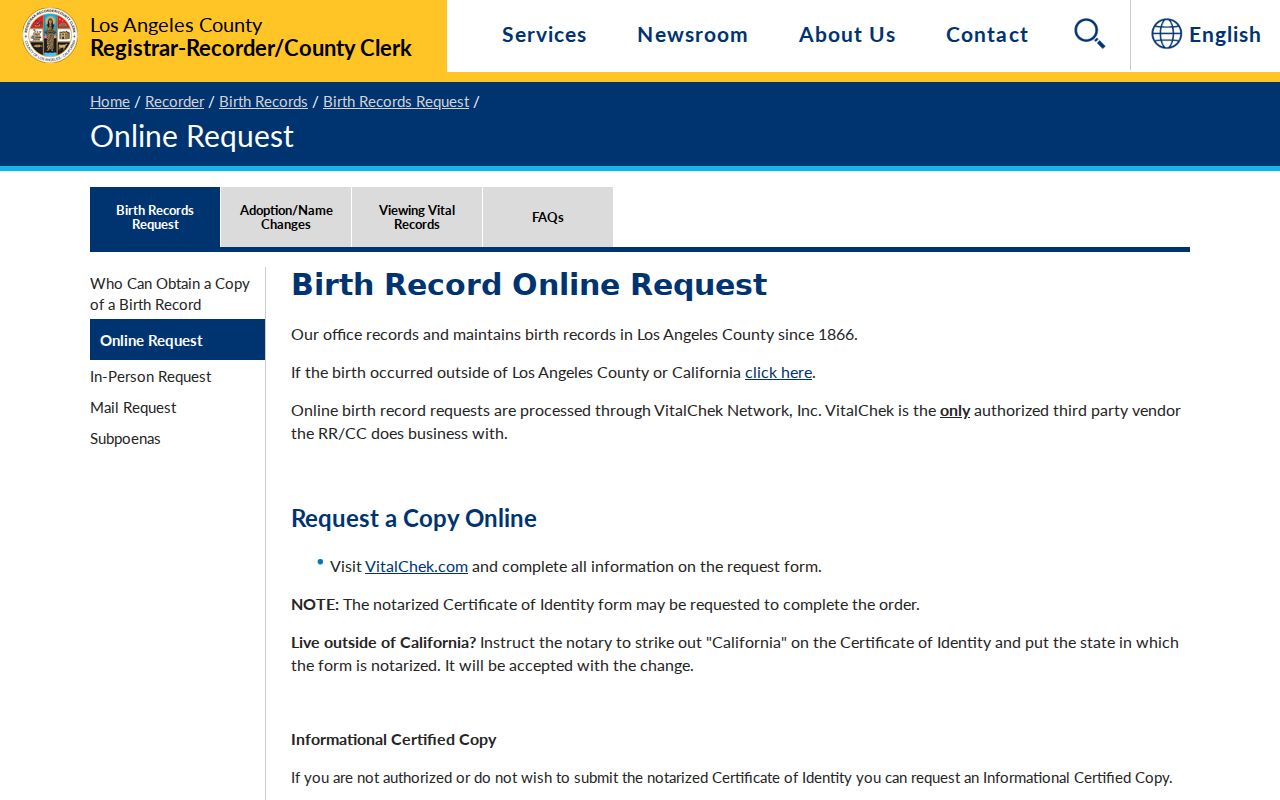
The online page is a copy-order channel, not a general name index. Non-exempt certificates and indexes may also be inspected by appointment in Norwalk, while CDPH accepts the relevant certificate form by mail.
California distinguishes authorized certified copies from informational certified copies. An authorized copy requires an eligible requester and a notarized sworn statement for a mailed application. An informational copy is marked as invalid for establishing identity. Confidential marriages under Family Code § 500 are not open for public inspection and can be obtained only by the spouses from the county clerk. Divorce decrees belong to LA Superior Court, not the RR/CC; CDPH provides only a certificate of record for dissolution.
Pomona Custody Record Lookups
County custody information begins with the LASD Inmate Information Center. It is the public locator for current Los Angeles County custody, while the LASD Records FAQ routes requests for booking information, custody incidents, incarceration records, visitation logs, and other responsive material. General custody help is available at (213) 473-6100 and (213) 893-5544.
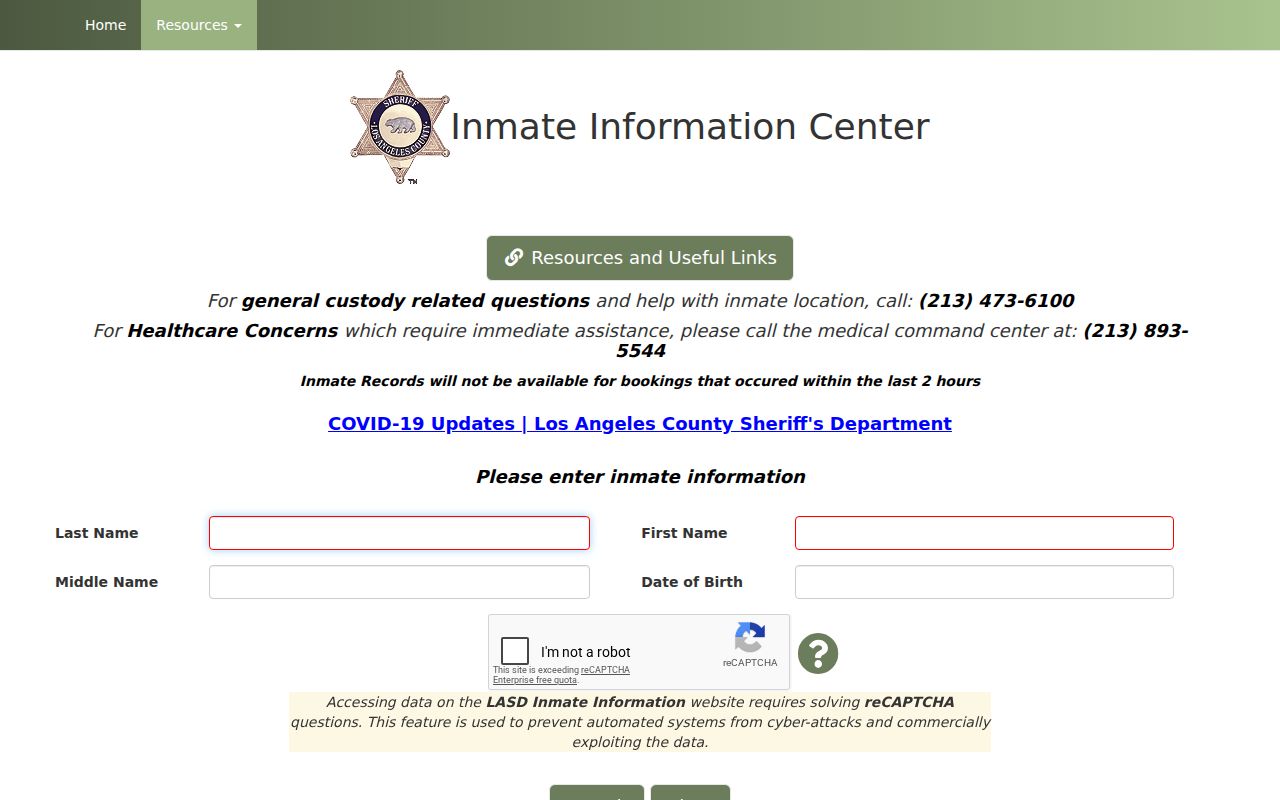
The locator answers a current-custody question. A broader incident or records question may still require the LASD request channel.
For state custody, California's CIRIS results can include name, CDCR number, age, current location, commitment counties, admission date, and parole-hearing dates or outcomes for people currently in CDCR custody. The California Megan's Law database is updated daily, but it displays only registrants and offenses that the law permits the state to disclose. Neither tool authorizes contact, harassment, or harm.
Note: A Pomona custody locator result is not a complete incident file; use the responsible agency's records channel for responsive documents.
Pomona Records Cross County Lines
Pomona is not the Los Angeles County seat. That geography explains why city files stay on South Garey Avenue, recorded documents and county vital files route to Norwalk, and local court access remains available at Pomona Courthouse South. The RR/CC also combines Recorder, County Clerk, and Registrar of Voters functions, the product of office changes in 1968, 1991, and 1993.
Pomona Courthouse South
400 Civic Center Plaza
Pomona, CA 91766
Appointments encouraged
The City Clerk's Laserfiche archive supports browsing, searching, retrieval, and printing for agendas, minutes, resolutions, ordinances, and related legislative files. Records absent from that archive use the city's request channel. County recorder, vital, voter, assessor, and court materials should follow their routine service paths before a broad CPRA filing.
California CPRA for Pomona Records
The California Public Records Act, Government Code §§ 7920.000-7931.000, lets any person request non-exempt records held by state and local agencies. A request should reasonably describe identifiable documents. The agency generally determines within ten days whether responsive records are disclosable, though unusual circumstances may support a statutory extension. That is a determination window, not a promise that every copy will arrive in ten days.
Electronic copies can often be supplied without charge. An office may assess duplication or direct copy costs and should identify the fee before production. Special statutes and exemptions can override the general presumption of access. Protected-address information, confidential voter data, juvenile and sealed court files, confidential marriages, and some identity or medical data are examples relevant to Pomona requests.
Lawful personal use. Open records may support genealogy, heir matters, civic review, and fraud checks. Never use record data to stalk, harass, intimidate, or harm anyone.
Request Pomona Public Records
Use the office's ordinary service when a record has a set form or portal. A vital certificate application, deed-copy order, court image request, or voter-information form is more precise than a general CPRA request. For city legislative records, search Laserfiche first. A CPRA request is the practical next step when the responsive city or agency record is not available through a routine channel.
- Name the custodian. Decide whether Pomona, the RR/CC, the Assessor, the court, LASD, or a state agency created and keeps the record.
- Check the standard channel. Search the archive, index, portal, appointment page, or agency form before filing a broader request.
- Describe the record. Give a record type, date range, department, property address, case number, or other detail that identifies responsive files.
- Choose the format. Ask for electronic records when suitable and request certification only when an official certified copy is needed.
- Review the response. Pay disclosed copy costs, narrow an overbroad request, or ask the office to identify the legal basis for withheld material.
The RR/CC request page routes county requests through its NextRequest service.
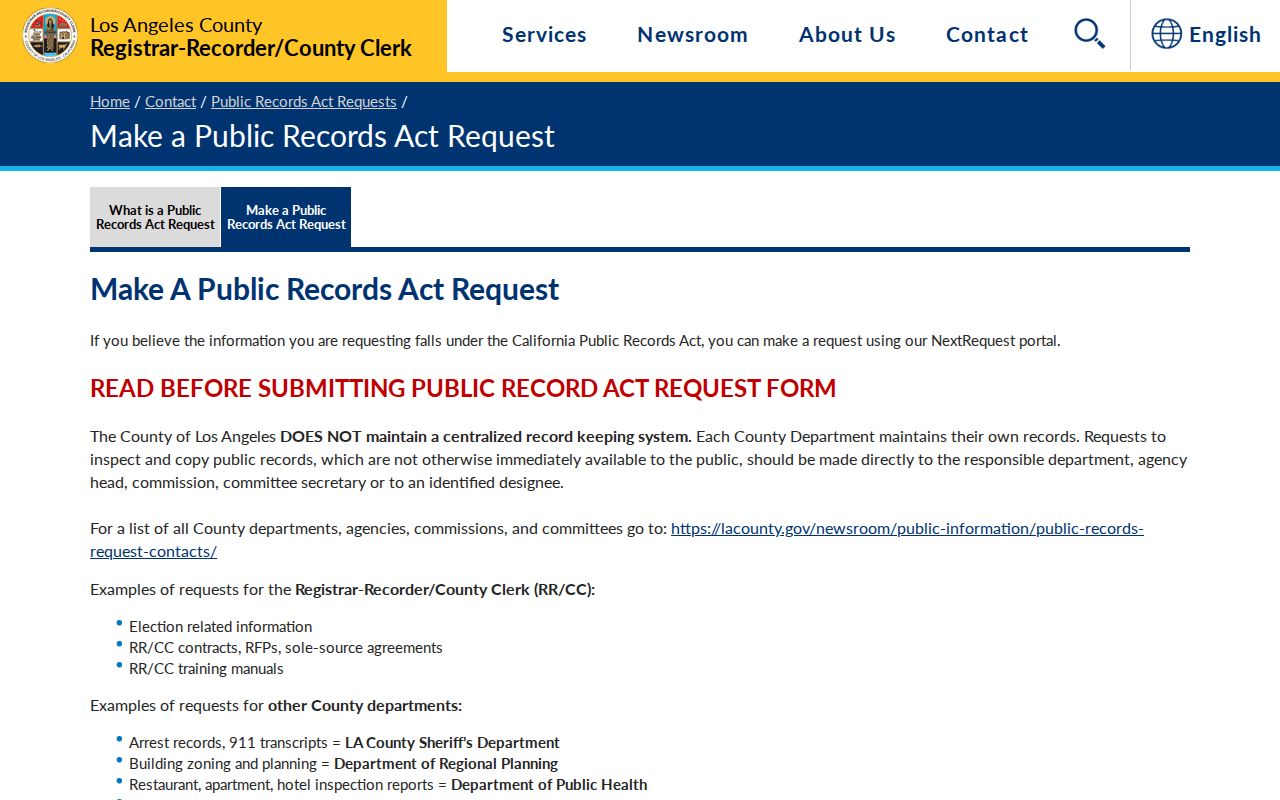
NextRequest is appropriate for responsive RR/CC agency material, while deeds, certificates, voter data, and other set services should still use their specialized order paths.
Pomona Records Request Terms
A few terms prevent costly mistakes. A search result is not always a document, and a certified copy is not always available to every requester. These distinctions matter most when a Pomona record is needed for an estate, a family-history file, or proof from an official keeper.
- Custodian
- The agency or office responsible for keeping and responding for a record.
- Index
- A finding aid that identifies a record by name, date, number, or type but may not show the document image.
- Certified copy
- A copy authenticated by the issuing office. Eligibility limits may apply to vital records.
- Informational copy
- A California vital-record copy marked as not valid to establish identity.
- Exemption
- A legal basis that permits or requires an agency to withhold all or part of a record.
A redacted record has protected details removed while the disclosable remainder is released. If an office cites an exemption, ask whether a segregable, meaning separable, portion can still be provided.
Verify Pomona Record Fees
Fees depend on the channel. The Assessor public portal is free, court name searches and image purchases are paid, and RR/CC real estate copy costs vary by document. A county online real estate order may take up to 20 working days. CDPH's processing page reported five to seven weeks for certified copies and noted that county service can be faster.
A July 2026 research check found a timely conflict between CDPH web fee pages and current application materials. Web pages listed birth copies at $29, death at $24, public marriage at $17, and divorce records at $16, while 2026 form snippets showed $31 for birth and $19 for marriage. Use the amount printed on the current application and confirm the office's live fee schedule before mailing payment.
Pomona property owners should also be cautious with private deed-copy solicitations. The RR/CC Homeowner Notification Program sends copies of documents recorded against a home so an owner can examine them for possible fraud. An official county copy channel provides a firmer price and source than an unsolicited mail offer.
Note: A rejected payment amount can delay a mailed request, so verify both the current form and the current fee on the same day.